Projects
Just Energy Transition Advocacy Workshop
As the world shifts from fossil fuels to renewable energy, large-scale infrastructure such as solar farms and wind parks often occupies vast areas of land traditionally held by local and Indigenous communities. To ensure this transition does not repeat exploitative patterns, ARANYA developed the JET Toolkit to make legal and policy knowledge practical, accessible, and actionable.
This project translates complex legal and environmental policies into community-friendly guidance so people can understand how the global energy transition affects their lives, livelihoods, and landscapes. The toolkit is designed to support equitable decision-making by strengthening legal literacy, community participation, and accountability in renewable energy development processes. ARANYA hosted intensive consultation sessions at Bojheni, Shankharapur Municipality to map socio-economic and land rights, helping community members identify protections they are legally entitled to and translate legal awareness into collective action against hydroelectric transmission line and sub-station construction.
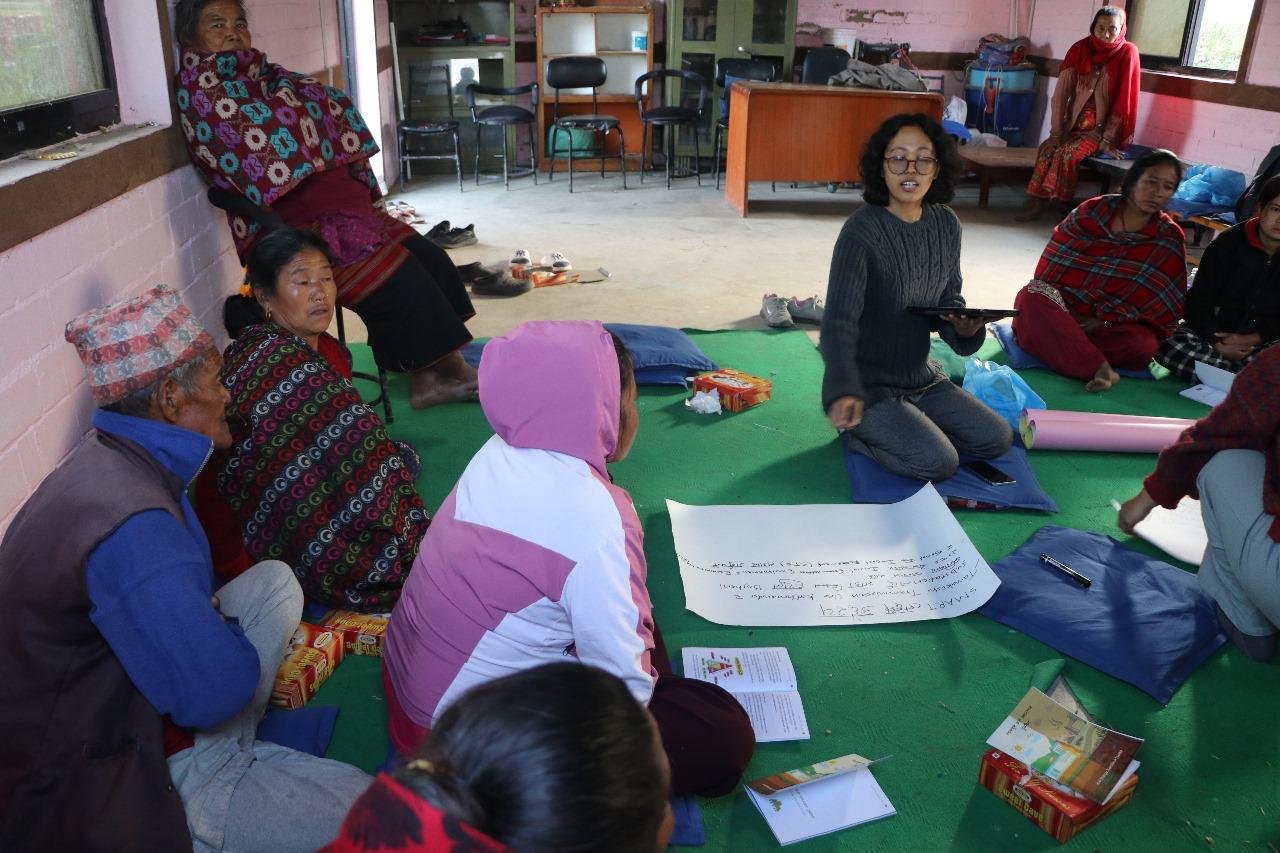
Community members and facilitators co-create local strategies by discussing rights, risks, and practical pathways for equitable renewable energy transitions.
Rights and Policy Frameworks
Participants are equipped with strategic tools to organize effectively and influence decision-making.
- Documenting rights violations and collecting evidence.
- Filing formal complaints with local and district authorities.
- Using media channels to amplify community voices.
- Applying Advocacy Planning and Power Analysis to build alliances and challenge unfair power dynamics.
Together, these tools support an energy transition that is equitable, transparent, and accountable to affected communities.